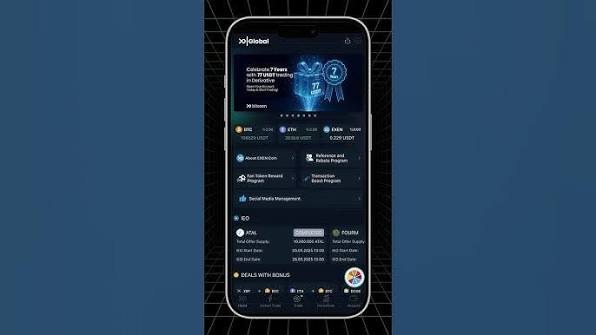
In crypto, the most expensive buttons are the “Confirm” buttons. A bank transfer to the wrong IBAN can usually be recalled; an asset sent to the wrong network or address on a blockchain has no central authority to appeal to. That is why this guide is more than a how-to list: we built a double-check into every critical step. Details are based on the official bitexen.com and global.bitexen.com sources; fees and limits may change.
Orientation first: Bitexen or Bitexen Global?
Some people searching for “Bitexen Global withdrawal” actually want to withdraw lira from the Türkiye platform; others really mean the Global platform run by Lithuania-registered Bitexen Europe UAB. The difference matters:
- bitexen.com (Türkiye): TRY deposits and withdrawals happen here, over local banking integrations. Crypto withdrawals are supported too.
- global.bitexen.com (Global): USDT-based markets; money moves in and out primarily via crypto transfers. TRY bank payouts are not this platform’s job.
This page covers both scenarios: first the lira payout (Türkiye platform), then crypto withdrawals, which apply to everyone.
Withdrawing TRY: step by step
- Register your bank account. Withdrawals go only to a bank account held in your own name. Spouse, sibling or friend accounts are ruled out by regulation; trying just wastes time on the refund cycle.
- Select TRY on the withdrawal screen and enter the amount. The screen shows the fee for that transaction and the net amount that will reach your bank — read that line before confirming.
- Complete the verifications. A 2FA code and/or e-mail confirmation will be requested. The “hassle” of these steps is precisely what slows an attacker’s exit if your account is compromised; don’t disable them.
- Know the timing. Minutes to partner banks during business hours; delays at night and on weekends are normal and depend on the banks’ own rails.
Tip: withdrawing a large amount? Do it in one transfer — the flat fee shrinks in percentage terms — but check your daily limit first. Frequent small withdrawals are inefficient on both fees and the likelihood of security reviews.
Limits and fees
| Item | Publicly cited value* | Note |
|---|---|---|
| TRY withdrawal fee | Small flat fee (announced around 3 TL) | The live amount appears on the withdrawal screen |
| Daily TRY limit (verified) | ≈500,000 TL | Can be raised with extra verification |
| Monthly TRY limit (verified) | ≈2,500,000 TL | May be updated with regulation |
| Crypto withdrawal fee | Asset- and network-dependent | TRC-20 low; ERC-20 high, tied to gas |
| Minimum withdrawal amounts | Varies by asset | Check the floor on the withdrawal screen |
*Compiled from official help pages and public reviews; the binding source is the live table at bitexen.com.
Withdrawing crypto to your own wallet
Keeping long-term savings in a wallet you control — not on an exchange — is the principle we repeat on every page of this site. Here is that transfer, done without mistakes:
- Generate the receiving address in your wallet. In Trust Wallet, MetaMask or your hardware wallet, select the asset and copy the “Receive” address. Note which network the address belongs to — the single most critical fact in this whole process.
- Open the withdrawal screen on the exchange. Select the asset, paste the address (never type it by hand), and pick the network that matches your wallet’s exactly.
- Double-check. Compare the first 4 and last 4 characters of the pasted address against your wallet. Clipboard malware that swaps a copied address for the attacker’s is a real and widespread category of malicious software.
- Send a small test first. Sending to an address for the first time? Transfer a token amount, watch it arrive, then send the rest. The test transfer’s fee is the insurance premium against catastrophe.
- Confirm and save the TXID. The transaction hash (TXID) is your transfer’s tracking number on the blockchain; if you ever need support, it is the first thing they will ask for.
Network selection: the one rule that saves your money
SENDING NETWORK = RECEIVING NETWORK. Break this equality and your money can disappear. Withdrawing USDT over TRC-20? Then the destination must be a TRON-network address. Not sure? Don’t send — confirm which networks the receiving side supports first.
The same coin can live on several networks; USDT is the best-known example:
| Network | Address typically starts with | Fee level | When it makes sense |
|---|---|---|---|
| TRC-20 (TRON) | T... | Very low | The default choice for stablecoin transfers |
| ERC-20 (Ethereum) | 0x... | High/volatile | If you are heading into DeFi and the Ethereum ecosystem |
| BEP-20 (BNB Chain) | 0x... | Low | Only when the receiver explicitly supports it |
| Bitcoin network | bc1... / 1... / 3... | Moderate, congestion-based | The only correct way to move BTC |
Careful: ERC-20 and BEP-20 addresses look identical (0x...) — an interface may let you pick the wrong network without any warning. The feeling that “the address looks right” is the root cause of most mistakes between these two networks. Match the network name by reading it on both screens.
“My transfer hasn’t arrived”: fixing pending transactions
A transfer is like a flight: departure (exchange approval), cruise (network confirmations), landing (arrival in the wallet). Find which leg is delayed and the fix follows:
- “Under review” on the exchange side: a security check. First withdrawals, new addresses and large amounts trigger it; it can take a few hours. Past a reasonable window, write to support with your request number — see the contact guide.
- TXID exists but few confirmations: the transaction is on-chain and the network is busy. A crowded Bitcoin mempool can mean hours; there is nothing to do but wait. Track the TXID on a block explorer (Tronscan, Etherscan, mempool.space).
- TXID says “success” but the wallet shows nothing: usually the token simply isn’t visible in the wallet — add it manually (custom token). On EVM wallets, confirm the right network is selected.
- TRY payout not in the bank: could be a delay on the bank’s side; contact the exchange first with the receipt/transaction number, then the bank if needed.
Bonus: the deposit side deserves the same care
Let’s close the loop on the other direction, because some withdrawal disasters are actually planted at deposit time:
- Include the reference code with TRY deposits. Exchanges match incoming transfers to your account via a personal code or registered-IBAN matching. A transfer without (or with a wrong) reference lands in your balance days later, via a support ticket.
- Send only from your own bank account. Money arriving from a spouse’s card, a company account or a friend gets refunded by regulation — and the refund cycle is far slower than the deposit would have been.
- The network rule applies to deposits too. The network shown on the exchange’s deposit screen must match the sending platform’s network exactly. Deposit addresses are per-asset: you cannot send ETH to your BTC address.
- Watch for memo/tag assets. Some assets — XRP, XLM — require a
memo/destination tagalongside the address. A memo-less transfer looks “lost” and is recovered late, by support hands. If the deposit screen shows a memo field, that field is mandatory.
The general principle is symmetric: whichever direction money flows, compare the address + network + memo (if any) trio on both screens. That thirty-second ritual makes every recovery scenario on this page unnecessary.
Withdrawal security: whitelist and confirmation layers
Three settings make it hard to move money out even if your account is compromised; enable all three:
- Address book / whitelist: restricts withdrawals to addresses you approved in advance. Adding a new address requires extra verification and a waiting period — a serious obstacle for an attacker.
- Withdrawal e-mail confirmation: a second approval via a link sent to your inbox for every withdrawal. Your e-mail account having its own 2FA is the precondition of this chain.
- Withdrawal lock after password changes: a temporary restriction after a password change is standard — don’t curse the “why can’t I withdraw” moment; that window is exactly what saves a user whose account was just stolen.
Next step: when does a hardware wallet make sense?
You’ve learned to withdraw — but withdraw to where? Once your crypto savings exceed a few months’ salary, the answer gets clearer: a hardware wallet (cold storage). Your private keys live on a device that never touches the internet; no malware on your computer can sign anything. Devices from makers like Trezor and Ledger also pair with hot wallets such as Trust Wallet or MetaMask: day-to-day funds hot, the vault cold.
Seed phrase warning (we repeat it in every guide, because people still lose them): never store your recovery words digitally — no photos, no notes apps, no cloud. Write them on paper or a steel plate and keep them in two separate physical places. Anyone who sees the words can take everything, without ever touching the device.
Related guides: optimize your costs with the fee guide, handle account security and login issues with the login guide, and find official support routes on the contact page.
Frequently Asked Questions
How long do Bitexen withdrawals take?
TRY withdrawals to partner banks usually land within minutes, or up to a few hours outside banking hours or during peak load. Crypto withdrawals depend on network speed after exchange approval: TRON takes minutes, Bitcoin 10–60 minutes depending on congestion, Ethereum usually minutes. First-time withdrawals may face an extra security review that extends the time.
I sent crypto over the wrong network — can it be recovered?
It depends. For mistakes between address-compatible EVM networks (e.g. BEP-20 instead of ERC-20), recovery may be possible if the receiving side supports it — usually a paid and slow support process. Sending to an entirely different address format (e.g. an ERC-20 transfer to a TRC-20 address) is mostly blocked by interfaces anyway. The rule is simple: match the networks before sending; recovery is a goodwill process, not a right.
What is the Bitexen TRY withdrawal limit?
Public sources cite roughly 500,000 TL daily and 2,500,000 TL monthly for verified accounts, with higher tiers available through additional verification. Limits change with regulation and platform policy — check the current values on your official bitexen.com account page.
My withdrawal says “pending / under review” — should I worry?
Usually not. A first-time address, an unusual amount or night-time hours can trigger the automated security review; it is a mechanism protecting you. If a reasonable window (a few hours) has passed, open a ticket with your transaction ID via the official support portal. Any “acceleration service” contacting you on social media is a scam, without exception.
Can I withdraw TRY from Bitexen Global?
Bitexen Global operates on USDT-based markets; the TRY banking rails belong to the Türkiye platform, bitexen.com. To convert a Global balance to lira, the typical route is transferring the asset to your own wallet or to your account on a TRY-supporting platform and converting there. Verify network support on both sides before transferring.